
Disclosure: Some links below are affiliate links, meaning we may earn a small commission at no extra cost to you. Learn more.
Tashkent is the capital of Uzbekistan and the country’s main international gateway. While most travelers rush past it for other Silk Road cities, spending a couple of days here offers a modern, everyday look at Uzbekistan.
For us, it was the ideal place to slow down, sort out logistics, and ease into travel. If you are still mapping out your broader itinerary, our comprehensive Uzbekistan Travel Guide is your go-to resource for practical advice on train routes, visa logistics, and total trip budgets.
But if you are ready to explore the capital itself, we’ve put together this detailed Tashkent travel guide to share the exact metro hacks, practicalities, and local food spots we discovered on the ground.

Is Tashkent Worth Visiting?
Most travelers treat Tashkent like a transit hub and completely miss out.
It might not have the fairytale turquoise domes of Bukhara or Khiva, but it is modern and spacious with wide streets, green parks, Soviet-era architecture blended with modern skyscrapers, and one of the most impressive metro systems in the world!
Give this city at least 48 hours. It might surprise you the way it surprised us.
How Many Days Do You Need in Tashkent?
1–3 days is the ideal sweet spot.
How you split that time depends entirely on your travel style:
- 1 Full Day: Enough time to see the main highlights (like Chorsu Bazaar and a few iconic metro stations) if you are on a tight schedule.
- 2–3 Days: Highly recommended if you want to explore at a slower pace, visit museums, hop between local cafés, and fully recover from travel or jet lag before heading out into the desert.
Tashkent Practicalities & Arrival
How to get to Tashkent?
Most travellers arrive in Tashkent by international flight, as it is the main entry point into Uzbekistan.
The airport is located close to the city centre, and you can easily reach your accommodation by taxi using the Yandex Go app in around 15–30 minutes, depending on traffic.
Arriving in the city: What to expect
Once you land, the main things to take care of are:
- Transport to your accommodation – Taxis are very affordable and easy to book via Yandex Go.
- SIM card or eSIM – Local SIM cards such as Beeline are widely available and offer strong coverage.
- Cash withdrawal – ATMs are available at the airport. You can withdraw a small amount until you reach the city as it usually has ATMs with better rates.

Getting around: Metro, apps, and taxis
Navigating Tashkent is straightforward if you lean on its efficient transport:
- Metro: Inexpensive and acts as an underground Soviet-era art museum.
- 💡 Tip: Tap your international contactless Visa or Mastercard or your phone right on the turnstile glass.
- Yandex Go taxis: The most convenient option for longer distances and very affordable. You will need a working mobile number to register.
→ Read our detailed guide on how to get around Uzbekistan and book your train tickets.

👉 For a complete neighborhood breakdown and hand-picked accommodation options, check out our Tashkent accommodation guide.
Best Things to Do in Tashkent
Tashkent is more about exploring different areas, markets, and metro stations at a relaxed pace rather than being a “checklist sightseeing” city. To help you organize your itinerary, this core section of our Tashkent travel guide highlights the major landmarks along with the everyday corners we loved the most.
Chorsu Bazaar
Chorsu Bazaar ended up being one of our favourite places in Tashkent. It is ocated under a massive turquoise dome, and it’s a central trading point where locals buy everything from fresh produce to spices, dried fruit and traditional bread. It is organised in sections which makes it very easy to locate what you are looking for.
💡 Tip: Try the macadamia nuts! They were the most tasty ones we’ve ever had in our lives. Literally if I close my eyes I can still taste them.


It’s very lively, slightly chaotic, and one of the best places to experience everyday life in Uzbekistan.
Note: Free entry. Best visited in the morning when it’s most active. Bring cash if you plan to buy anything.
The Tashkent Metro: The World’s Most Beautiful €0.25 Art Museum
For only €0.25 per ride, you get access to a network of stations designed by the Soviet Union’s top architects and artists.
Fun Fact: They were originally constructed to serve as both a transportation network and nuclear shelters, so for decades, it was strictly illegal to take photos inside the Tashkent Metro. This ban was lifted a few years ago and attracted many photographers from around the world to capture their beauty.
Kosmonavtlar – Perhaps the most famous station in the system. It looks like a retro-futuristic sci-fi film set and it is decorated with deep blue mosaics and portraits honoring Soviet cosmonauts and Uzbekistan’s contributions to space exploration.


Alisher Navoi – Opened in 1984, Alisher Navoi is one of the most ornate metro stations with elegant Islamic-inspired architecture, intricate patterns, and decorative arches dedicated to the celebrated Uzbek poet Alisher Navoi.

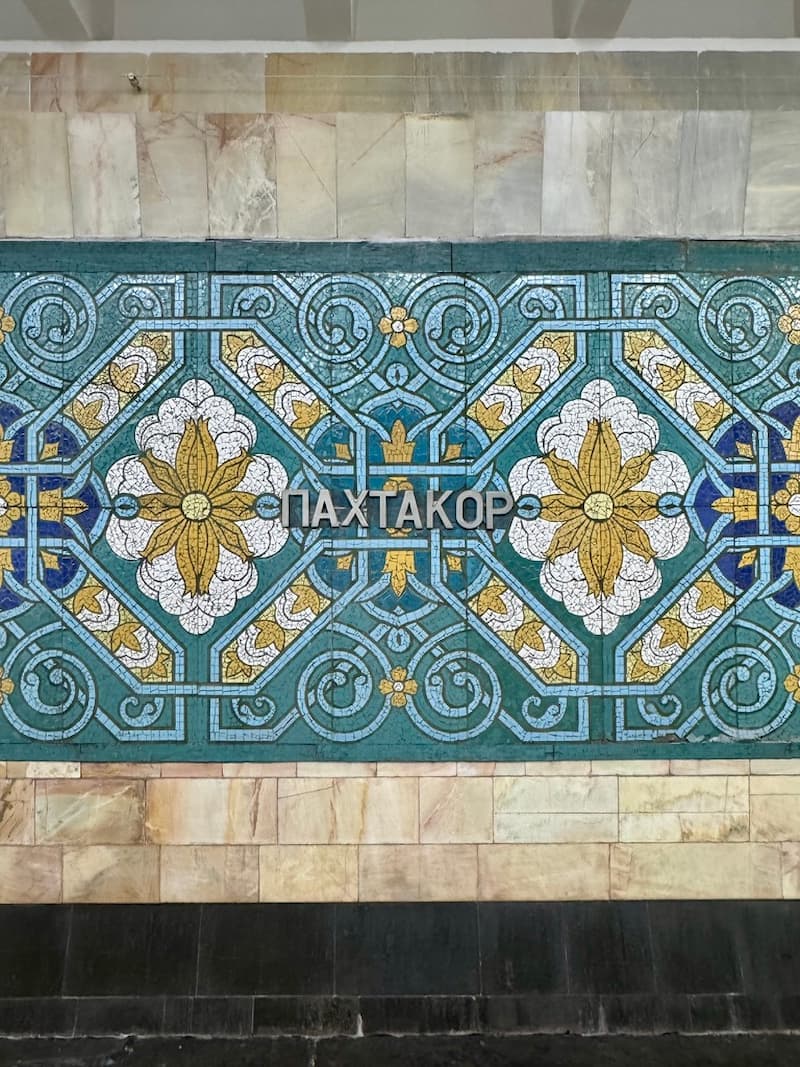
Pakhtakor – A gorgeous showcase of traditional Uzbek style, featuring giant, abstract yellow, green, and blue mosaics representing cotton fields on the walls.

Mustaqillik Maydoni – Located beneath Independence Square, this bright and elegant station provides easy access to one of Tashkent’s most important landmarks and symbolizes modern Uzbekistan’s independence.
Beruniy – Named after the renowned scholar Al-Biruni, this spacious station is simpler in design but pays tribute to Uzbekistan’s rich scientific and intellectual heritage.
Toshkent – One of the busiest stations in the network, conveniently linking the metro with Tashkent’s main railway station and long-distance train services across the country.


Yunus Rajabiy – Named after the famous Uzbek composer and musician Yunus Rajabiy, this elegant station is known for its impressive white marble interior, chandeliers, and symmetrical design.
Uzbekiston – Before you walk down into the tunnels of the Uzbekiston Station, keep an eye out for the massive mosaic mural in the entrance lobby featuring a majestic bird with its wings spread wide over a large circular seal.
This is the Huma bird, a mythical creature of paradise, freedom, and good fortune in Central Asian folklore. Look closely at what its massive wings are protecting: it is the original State Emblem of the Uzbek Soviet Socialist Republic. You can clearly spot the vintage Soviet design, weaving together traditional cotton plants and wheat stalks surrounding a rising sun. It’s a striking piece of beautifully preserved late-Cold War propaganda art serving as a direct, artistic greeting into the subway network.

Hazrati Imam Complex
A major religious and cultural center home to peaceful courtyards, mosques, and madrasas. It reflects Uzbekistan’s deep Islamic heritage and houses one of the world’s oldest Qur’ans, dating back to the 7th century.
💡Note: Free entry. Dress modestly (shoulders and knees covered). It’s usually quiet and peaceful compared to other attractions.
The Islamic Civilization Center: New for 2026
While it opened just after our visit, this massive architectural marvel is at the top of our list for next time. The three-story complex features a striking 65-meter blue dome, an interactive museum, and a research library. Most notably, its grand hall now houses the legendary 7th-century Uthman Quran.
Who is it for? History buffs, architecture lovers, and photography enthusiasts.
💡Note: Standard adult entry is 31000 UZS (~$25 / €22.60), with optional guided excursions available. You can book at the door, or book your time slot in advance via the Islamic Civilization Center Website.
Alternatively, you can join a tour on Get Your Guide that combines it with a traditional Uzbek restaurant or with the historic Hazrati Imam complex which sits adjacent to it.
Amir Timur Square
Located right in the city center, Amir Timur Square is a major meeting point surrounded by green spaces and government buildings.
It is dedicated to Amir Timur (Tamerlane), one of the most important historical figures in Uzbek history.
At its centre stands a bronze statue of Amir Timur on horseback, replacing a Soviet-era monument of Karl Marx after Uzbekistan gained independence to celebrate national pride.

It is free to visit and best seen in the late afternoon or evening when locals gather and the light is softer. We also sat on a bench and paid attention to people walking by. It was a great introduction to Tashkent’s everyday life.
Hotel Uzbekistan
You cannot talk about Tashkent without talking about Hotel Uzbekistan. It is an example of Soviet-era luxury, with its grand curving exterior and modernist architecture. It is fully operational and open to visitors for stays, if you are into Soviet-era lodging experience. We didn’t try ourselves but we would love to next time we visit.

Sayilgoh Alley (Broadway)
Sayilgoh Alley, or Tashkent’s “Broadway”, is a lively pedestrian street connecting Amir Temur Square and Independence Square in the heart of the city. Its name means “venue of events” in Uzbek, and true to that spirit, the alley is filled with street performers, artists, musicians, photographers, and local vendors.

It’s more about atmosphere than sightseeing and is nice for a short evening walk. We happened to be there during sunset and it was magical.
Independence Square
The largest square in Uzbekistan, symbolising modern independence and national identity after the fall of the Soviet Union in 1991. It features fountains, monuments, wide open spaces, and government buildings.
The area is very spacious and gives a strong contrast to the more traditional parts of the city.
Tashkent City Park
Tashkent City Park is arguably one of the city’s most modern and lively public spaces, built around a large lake and surrounded by cafés, restaurants, and sleek skyscrapers. The real magic happens after sunset when the park’s musical fountains begin their evening performance. Watching the illuminated water jets dance in sync with the music was the perfect way to end a day of exploring Tashkent.

Milliy Bog’ & Magic City
Milliy Bog’ and Magic City offer a more fun and family-friendly side of Tashkent that many international visitors seem to overlook. They are located within the same area and combine green spaces, lakes, walking paths, amusement rides, themed attractions, restaurants, and entertainment for all ages.


During our visit, we barely saw any other tourists and instead found ourselves surrounded by local families enjoying an evening out with their children, which made the experience feel even more authentic. While it may not be a must-see for every traveler, those who enjoy theme parks, fairground games, lively atmospheres, and seeing how locals spend their leisure time will likely have a great time here.
Where to Eat in Tashkent
Tashkent has a diverse culinary scene ranging from traditional spots to modern cafés. To make mapping out where to eat in Tashkent easy, here are the absolute must-try staples and the exact dining spots we personally tested:
- Lagman: A comforting, deeply savory pulled-noodle dish served either as a hearty soup or stir-fried with beef and vegetables.
- Samsa: Flaky, golden puff pastry pockets baked in a clay tandoor oven, typically stuffed with spiced minced mutton and onions.
- Shashlik: Incredible meat and vegetable skewers grilled over hot coals.
- Non: The glossy, delicious, traditional round bread that accompanies every single meal.
⏱️ The Golden Plov Rule: aim to arrive between 11:30 AM and 1:00 PM, as pots are usually scraped clean by 2:00 PM! Plov is traditionally a lunchtime meal in Uzbekistan, cooked in massive batches to be ready by noon. If you want to experience the best, freshest plov at any dedicated Osh center you’ll need to go early.


Spots We Personally Tested and Recommend:
- 🍽️ Ishtixon Zig’ir plov – Best for an ultra-authentic experience. It’s a very local spot known for its excellent plov. We were the only tourists inside, which made the experience feel very authentic.
- 🍽️ Besh Qozon (Central Asian Plov Centre) – The ultimate Tashkent food experience! You can walk straight into the open courtyard to watch the master chefs use giant wooden paddles to scoop rice and lamb out of the iron cauldrons. It gets very busy, and chaotic around noon, but sitting at the communal tables makes it an unmissable cultural experience.
- 🍽️ Labi Havuz – A relaxed local restaurant serving traditional Uzbek dishes in a casual setting, popular with both locals and visitors and an excellent place to grab dinner and try different varieties of shashlik.
- 🍽️ Afsona Shevchenko – A more modern Uzbek restaurant near the city centre. It’s perfect if you want a slightly more upscale atmosphere while still getting authentic local flavors.
- 🍽️ Restaurant Caravan – One of the most well-known restaurants in Tashkent. It’s slightly more touristy but still worth visiting for the atmosphere.
Best Day Trips from Tashkent
While the capital is used primarily for urban exploration, it is a great point to experience Uzbekistan’s natural landscapes. To help you round out your itinerary, here are two scenic escapes located just a short drive outside the city:
Chimgan Mountains
A popular mountain area about 1.5 –2 hours from the city, known for its hiking trails, scenic alpine views, and a cable car that offers great panoramic views. It’s especially nice in spring and autumn shoulder seasons when temperatures are mild and the landscape is vibrant green.
Charvak Lake
A massive mountain reservoir surrounded by hills, popular with locals for swimming, lakeside picnics, and summer day trips. It’s more relaxed than Chimgan and works perfectly as a slow, refreshing escape from the city heat.
⏰ Planning the rest of your trip? Don’t miss our other Uzbekistan guides:
→ Where to Stay in Tashkent: 3 Best Neighborhoods & Hotels
→ Uzbekistan Trains & Transport Ultimate Guide
→ Uzbekistan Travel Guide
→ Samarkand Travel Guide for a deep dive into Registan Square and iconic architecture.
→ Bukhara Travel Guide for exploring ancient minarets and historic bazaars.
→ How Much Does a Trip to Uzbekistan Actually Cost?
→ How to Plan the Ideal Uzbekistan Trip: 1, 2 & 3 Week Itineraries
Frequently Asked Questions (FAQs)
Absolutely! Tashkent, and Uzbekistan as a whole, is considered a very safe destination for tourists, and solo travellers. Locals are incredibly hospitable and caring, and crime rates remain very low.
Yes! Photography and filming have been officially allowed since 2018 (it was strictly banned before that). You are free to capture the stunning Soviet-era mosaics and architecture.
The Yandex Go app is the absolute best way to navigate the city. It’s incredibly cheap, reliable, and removes any language barrier. For a more iconic experience, the metro is clean, fast, and costs next to nothing.
It is becoming more common, especially among younger people and those in the tourism sector, but don’t expect it to be the same outside of the major hubs. A few basic phrases in Uzbek or Russian go a long way, and translation apps work wonders here.
It is totally fine to wear your usual holiday clothes in Uzbekistan. The only caveat is respecting local customs at religious sites: make sure to cover your shoulders and knees. Otherwise, casual, comfortable clothing is perfectly fine.