

Disclosure: Some links below are affiliate links, meaning we may earn a small commission at no extra cost to you. Learn more.
Let’s be honest: after spending a couple of days exploring the gorgeous temples of Angkor Wat, you’re going to be “templed out” and low on free time.
When I was planning my trip to Cambodia and trying to find ways to experience Siem Reap beyond Angkor Wat, I came across countless guides promising 15 to 20 things to do in Siem Reap which felt very overwhelming.
To help you make the most of your trip and because I genuinely respect your time, I’ve cut through the noise and narrowed them down to 7 best things to do in Siem Reap plus 2 well-meaning places like certain ethical-sounding projects that might seem like a great idea, but are actually better skipped.

How Many Days Do You Need in Siem Reap
3 to 4 full days is the sweet spot to experience both the temples and local culture without burning out. Squeezing everything into a rushed 48-hour whirlwind will leave you exhausted.
Here is the ideal way to pace your trip:
- Days 1 & 2: The Temples. Dedicate your first two days to the archaeological park. It is best to have a local guide given the rich history, details and intricate layouts.
→ Check out our post Why a 2-Day Angkor Wat Tour is Worth Every Penny.
- Day 3: In-Town Culture & Markets. Rest your feet by doing something in the city, such as taking a Khmer cooking class, visiting the APOPO HeroRATs, and exploring the night markets or Phare Circus.
- Day 4: Nature & Day Trips. Head out for a half or full-day excursion, whether exploring the floating villages of Tonle Sap with an ethical company that uses tour earnings to build community schools, chasing waterfalls at Phnom Kulen, or exploring the rural villages west of Angkor.
If you only have 3 days, you can compress Day 3 and Day 4 and choose your preferred activities from the list below.
Best Things to Do in Siem Reap Beyond Angkor Wat
1. Explore Psar Chas & the Night Markets
As the sun goes down, the town center transforms into an lively market. Start your evening wandering through Psar Chas (the Old Market) to soak in the local atmosphere, and check out the vibrant souvenir stalls.


Once you’ve explored the indoor market, cross over toward the nearby night markets where you can grab a cold Angkor beer, and try the yummy local street food. It’s the ultimate way to wind down after a day of sightseeing and easily one of the most essential things to do in Siem Reap without needing any structured itinerary.


Best for: Evening vibes, street food, and local shopping (quick 2–3 hour evening stop).
Cost: Free to enter (budget as needed for souvenirs and street food).
2. Visit the APOPO HeroRATs
Speaking of unique activities to do in Siem Reap beyond Angkor Wat, visiting the APOPO Visitor Center is an absolute must. It is conveniently located on the route back from Angkor Wat temple complex so you can combine the two if you’re short in time.
APOPO Visitor Center introduces you to the incredible African Giant Pouched Rats (affectionately known as HeroRATs) that are specially trained to detect landmines and unexploded ordnance in Cambodia.


During the guided tour, you’ll learn about Cambodia’s landmine history, watch a live demonstration of a HeroRAT sniffing out a mock minefield, and even get the chance to gently hold one of these remarkably calm and clever creatures. It’s a wonderful, family-friendly initiative where every ticket directly supports humanitarian demining work.

Best for: Inspiring impact stories and a truly unique historical experience.
Cost: $10 per person (free for children under 10).
Opening Times: Open every day from 8:30 am to 5:00 pm (last tour begins at 4:30 pm).
👉 Book your timed entry ticket via the official website, especially during peak season. We visited towards the low season (end of March) and managed to buy our tickets at the entrance.
3. Experience Phare, The Cambodian Circus
Forget everything you think you know about traditional circus acts. Phare, The Cambodian Circus is a breathtaking kaleidoscope of contemporary theater, acrobatics, live music, and storytelling.
Instead of animal acts or cheesy routines, the performers (who are graduates of the Phare Ponleu Selpak non-profit arts school) share dramatic, emotional, and sometimes humorous stories drawn from their own lives, Cambodian folklore, and recent history.

Pro tip: arrive around 5:30 PM when the gates open to enjoy the pre-show Cambodian street food, browse local crafts, before the main performance begins at 8:00 PM.
Best for: Culture and world-class evening entertainment.
Cost: Ranges from $18 for side seating (Section C) up to $38 for reserved center front rows (Section A).
👉 Book your tickets via GetYourGuide and take advantage of the free cancellation benefit, or book direct on their official site.
4. Take a Traditional Khmer Cooking Class
Cambodian cuisine is often overshadowed by its famous neighbors, and diving into a culinary workshop is one of the most rewarding things to do in Siem Reap (or even in Phnom Penh if you want to spread out the activities across the country).
Their cuisine is far milder and more aromatic than Thai cuisine, and their dishes rely heavily on fresh herbs, lemongrass, galangal, kaffir lime, and subtle spices.


Most cooking classes begin with a guided walk through a local market (like Psar Chas) to handpick fresh ingredients and learn about local produce. Afterward, you head to the local guide’s home to chop, stir-fry, and master iconic dishes like Amok or Lok Lak. The best part? You get to sit down and eat a multi-course feast of everything you just made.
Best for: Foodies looking for a hands-on cultural experience.
Cost: Typically ranges from $20 to $30 per person, depending on whether it includes a local market tour.
👉 Check availability on GetYourGuide or Book with Viator.
Unforgettable Day Trips Around Siem Reap
5. Visit Kompong Khleang: A Responsible & Ethical Choice
When looking for the most meaningful day trips around Siem Reap, visiting Tonle Sap Lake is a highlight, BUT only if you pick the right village.
I strongly recommend avoiding the “closest” floating villages like Chong Khneas or Kampong Phluk. These spots have unfortunately become notorious tourist traps where local communities might be exploited, animals are kept in cruel conditions for photo ops, and “rice scams” are common. You often end up paying high prices that never actually reach the families living there.
Instead, prioritize Kompong Khleang. It is further from the city, but a model for ethical tourism. Because it is large and self-sufficient, it retains its authenticity. By booking here, your money supports local schools, water filtration projects, and sewing workshops providing residents steady income outside fishing.

You aren’t just an observer; you are a supporter of a resilient community that has adapted to the lake’s dramatic seasonal rise and fall for generations.
Best for: Authentic community connection, supporting local families, and true floating village culture.
Cost: ~$20–$30 (depending on transport). Note: Because this is community-run, your money goes directly to the village.
👉 How to book: To ensure your visit is truly ethical and directly benefits the local families, book your trip through the official Kompong Khleang website. They prioritize local guides and reinvest 100% of profits into the community.
6. Explore the Countryside
We truly enjoy stepping off the beaten tourist path, so this was one of the first day trips around Siem Reap that we did. We rented a 125cc scooter from the city center and drove around the Buffalo village, and the entire West Baray lake with no plan.


Looking back today, this was my favourite evening because we got to drive through small villages, hidden temples, stilted houses, and local families having picnic and swimming in West Baray lake and so much more that we would have missed if we had stayed in the typical tourist spots.
Best for: Escaping the tourist crowds and experiencing authentic rural life.
Cost: $8/€6.9 per day if renting a scooter like us, or around $15–$30 if you hire a local driver for half day via your hotel or accommodation (depends on the route, time and stops).
7. Explore Phnom Kulen National Park
For those craving lush jungle, and a refreshing escape from the tropical heat, heading up to Phnom Kulen National Park is one of the best day trips around Siem Reap. This sacred mountain plateau is packed with fascinating archaeological treasures and it is regarded as the birthplace of the ancient Khmer Empire.

You can hike to the Kulen Waterfall for a refreshing swim, explore the mysterious River of 1000 Lingas, the stunning cliff (Poeng a Kho), and visit the iconic Preah Ang Thom pagoda that houses a massive reclining Buddha carved directly into the natural rock formation – we saw a similar one in Sri Lanka and it was equally impressive.
Best for: Waterfalls, ancient river carvings, and full-day nature escapes.
Cost: $20 per person for the national park entrance fee (plus transport costs).
👉 Book a small-group tour (with picnic lunch) incl. the admission fees for convenience and comfort.
2 Things to Skip in Siem Reap
Knowing what experiences to leave off your list is just as important as deciding where to go. To ensure your travels leave a genuine impact, make sure to skip these two common tourist practices:
1. Orphanage Visits and Short-Term “Voluntourism”
While these visits are often marketed with the best of intentions, the reality behind orphanage tourism in major hubs like Siem Reap is deeply problematic. Children should never be treated as tourist commodities or photo props.
In our opinion, facilities that rely on a rotation of short-term foreign visitors disrupt children’s education, infringe on their privacy, and in worst-case scenarios, have been linked to institutional exploitation.
Instead of visiting or volunteering at orphanages, choose to support reputable child-protection charities and local educational NGOs from afar, such as Friends-International, which works extensively across Cambodia to protect vulnerable youth and keep children safe within their families.
2. Elephant Riding and Unethical “Sanctuaries”
Seeing elephants up close is a major draw for many travelers (not just in Cambodia), but any venue offering elephant rides, circus-style tricks, or interactive bathing sessions should be firmly avoided.

To make wild animals docile enough for humans to ride or wash, they often endure harsh training conditions and unnatural confinement.
If you truly want to see elephants in Cambodia, look strictly for reputable, no-touch, observation-only projects that prioritize animal welfare over visitor entertainment, such as the Kulen Elephant Forest located just outside Siem Reap.
Siem Reap Beyond Angkor Wat: Final Thoughts
Exploring the magnificent temples of Angkor Wat is an absolute must, but staring at ancient stone carvings from dawn until dusk shows only one side of the area’s history and possibilities. By mixing some of the above diverse things to do in Siem Reap into your schedule, you’ll unlock a much richer, more balanced side of Cambodia.
Whether you spend your time taking day trips around Siem Reap into the quiet countryside, like we did, or supporting local social enterprises, stepping away from the temples will help you build genuine cultural connections you will remember for a lifetime.
⏰ Planning the rest of your trip? Don’t miss our other Cambodia guides:
→ Why a 2-Day Angkor Wat Tour is Worth Every Penny
→ Cambodia Transport Guide
→ Saracen Bay Accommodation Guide
→ How to spend 2 days in Koh Rong Samloem
→ Is Phnom Penh Worth Visiting?
→ Phnom Penh Killing Fields and S21
→ How to Spend 10 Days in Cambodia
Frequently Asked Questions (FAQs)
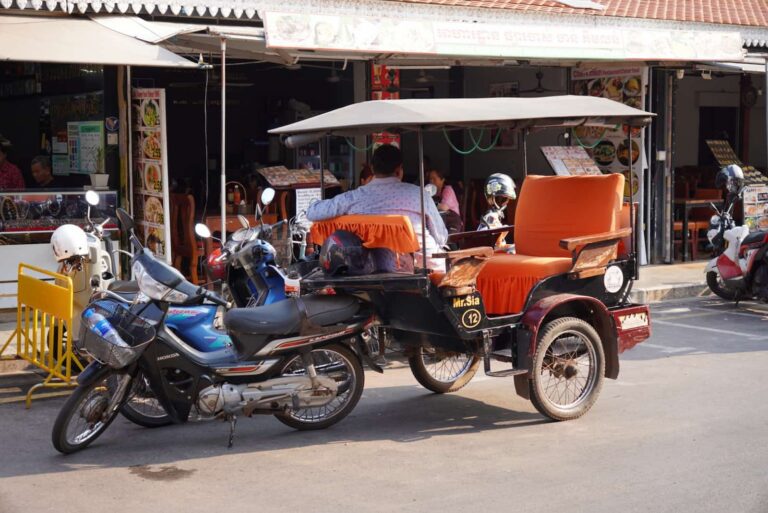
Not necessarily! Many spots like the Old Market, night markets, and countryside routes are very easy to explore independently via bicycle or hired tuk-tuk.
However, for specialized experiences like Phnom Kulen National Park, or other day trips around Siem Reap, booking a community-led or small-group tour ensures smoother transport and deeper cultural context.
It can be, but you have to choose carefully. Avoid overcrowded, highly commercialized villages like Chong Kneas or Kampong Phluk, which are notorious for tourist traps and exploitation.
Instead, opt for community-run projects like Kompong Khleang, where your tourism dollars directly support local schools and families.
Giving yourself 2 full days dedicated entirely to non-temple activities (like a countryside trip, a cooking class, the Phare circus, and a village excursion) is the sweet spot to avoid travel burnout.