

Disclosure: Some links below are affiliate links, meaning we may earn a small commission at no extra cost to you. Learn more.
Preparing for our trip to Uzbekistan was honestly a bit stressful. We arrived with only the basics figured out and spent our first few days piecing together conflicting information about trains, hotel registration, and local apps.
We put together this Uzbekistan travel guide so you don’t have to do the same. We’ve compiled every practical tip, cost breakdown, and logistics hack we wish we knew before landing, so you can skip the headache and head straight to those turquoise domes.
If you’re still on the fence about the trip, trust us – now is the best time to visit Uzbekistan, before the crowds roll in!
WELCOME TO…

Travel Essentials
🇺🇿 Capital: Tashkent
💱 Currency: Uzbekistani Som (UZS)
🗣 Language: Uzbek (official), Russian and Tajik (widely spoken)
👥 Population: ~36 million
30-day Visa-Free: Available for more than 90 nationalities.
E-Visa: Online application via the official e-visa portal.
Quick Tool: Check on Passport Index.
Best Places to Visit in Uzbekistan (At a Glance)
To get the most out of Uzbekistan, it helps to think of the country as one classic route connecting the capital with the historic Silk Road stops:
- Tashkent: More than just a transit hub. The capital is home to local markets like Chorsu Bazaar and the perfect introduction to Uzbek food culture. Use our Tashkent travel guide to plan a day or two here.
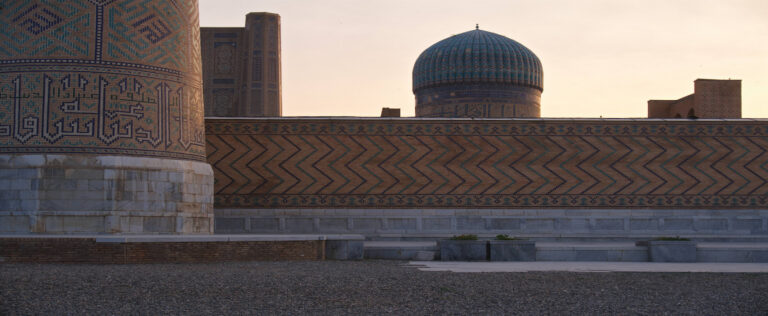
- Samarkand: The iconic postcard stop. Seeing the sheer scale of the blue-tiled Registan in person is a goosebamps experience! Our Samarkand travel guide covers how to navigate the massive historic complexes.
- Bukhara: A compact, deeply historic favorite. It’s highly walkable, and you can easily spend days wandering the ancient domed brick marketplaces with our Bukhara travel guide to find the best hidden spots.
- Khiva: Located way out west, this beautifully preserved mud-walled fortress city gives you the feeling of being at an open-air museum.
👉 To plan your itinerary and map out your route, check out this guide:
How to Plan a Trip to Uzbekistan: 1, 2 & 3 Week Itineraries


Do you have a bit more time? Venture off the main track into the Fergana Valley for traditional silk and ceramic workshops, or head far west to Karakalpakstan to explore desert fortresses and see the Aral Sea.
Best Time to Visit Uzbekistan
The best time to visit Uzbekistan is during the spring (April to June) and autumn (September to October), when temperatures are comfortable for walking around the cities and exploring between destinations.
keep in mind that summer can become intensely hot, especially in desert areas and cities like Bukhara and Khiva, where temperatures regularly exceed 40°C. If you happen to be there during this time (we went in late July!) then exploring in the early mornings and evenings will be your best option.


Visa Requirements for Tourists
Uzbekistan grants visa-free access for up to 30 days to passport holders from over 90 countries. If the visa-free entry doesn’t apply to you, you can apply for a 30-day e-visa online via the official Uzbek e-visa portal. Always check official government guidelines before booking as policies can change.
❗️Important Note: All accommodation owners are legally obliged to register foreign guests within 72 hours of arrival. Keep the physical (or electronic) registration slips from every hotel, hostel, or Airbnb you stay at as border control may ask for them when you exit the country.
How to Get Around Uzbekistan
Coming from Europe, we weren’t entirely sure what to expect from Uzbekistan’s transit system. We quickly discovered that it is remarkably efficient, but popular routes fill up fast. It is best to lock in your journeys ahead of time and booking your train tickets online.
👉 Head over to Uzbekistan Trains & Transport Guide to map out your routes, and find out how to book your train tickets.
Uzbekistan Travel Costs & Budgeting
Uzbekistan is one of the most affordable Central Asian destinations. Daily expenses generally range from €25–€40 for budget travelers, €50–€80 for mid-range travelers, and €90+ for higher comfort.
Want to see our exact expenses, itemized spending logs from our 25-day trip, and money-saving tips?
👉 Head over to our Uzbekistan Travel Cost Guide.
Money, Cash & ATMs
Cash is still widely used in Uzbekistan outside major tourist spots, so you’ll always want local currency on hand. While exchange offices are easy to find, it’s best to withdraw cash directly from ATMs.
I recommend using the free ATM Fee Saver app (Google Play / Apple) to find the best ATMs around you. During our trip, we predominantly used Kapital Bank ATMs.
💡Tip on Currency: The Euro converts into a massive amount of Uzbek Som (roughly 14,000 Som per €1), meaning a simple €100 withdrawal results in a thick stack of cash. Bring a separate pouch or wallet just to fit all the bills – trust us on this!
→ Planning your budget? Head over to our Uzbekistan Travel Cost Guide for a full breakdown of daily expenses.
SIM Cards & Internet
Staying connected in Uzbekistan is easy and affordable, but skip international eSIMs like Airalo or Saily as they are vastly overpriced here.
Instead, grab a local physical SIM card from Beeline Uzbekistan at the airport or an official city-center store. It costs just €6–7 for a massive data package that will easily last your entire trip. Just bring your passport, as it’s mandatory for registration.
🔒 Pro Tip: If you plan on logging into public hotel Wi-Fi networks or making online payments while away, we highly recommend using NordVPN.
Food in Uzbekistan
No Uzbekistan travel guide would be complete without talking about the food, which is hearty, filling, and very affordable. Expect plenty of rice, bread, meat, soups, and tea, with influences from the country’s Silk Road history. Portions are generous, and we never left a restaurant hungry.
Some dishes you shouldn’t miss:
- Plov – Uzbekistan’s national dish and easily the food we ate most often. This rice dish is typically cooked with meat, carrots, and onions, and every region seems to have its own variation.
- Samsa – flaky pastries filled with meat, potatoes, pumpkin, or other vegetables.
- Lagman – a noodle dish served either as a soup or stir-fried with a rich meat and vegetable sauce.
- Shashlik – grilled meat skewers, commonly served with onions and bread.
- Non – traditional round bread baked in clay ovens and served with almost every meal. You’ll easily find fresh ones baked in supermarket clay ovens all day long.


Vegetarian options are available, although they can be harder to find and more limited in traditional restaurants. Tea is also an important part of daily life and is often served alongside meals.
Cultural Tips, Dress Code & Etiquette
Uzbeks are incredibly welcoming and hospitable. While you can easily get by with English in the main tourist hubs, showing a little respect goes a long way:
- Dress Modestly: Be mindful of your outfit choices, especially when visiting the stunning mosques and religious sites.
- Shoes Off: Always remove your shoes when entering homes, guesthouses, or certain indoor areas if requested.
- Embrace the Tea Culture: Tea plays a massive role in daily life here. If someone offers you a cup, accept it. It’s a heartfelt gesture of hospitality.
- Ask Before You Snap: Always ask for permission before photographing locals, particularly in smaller towns and traditional markets.
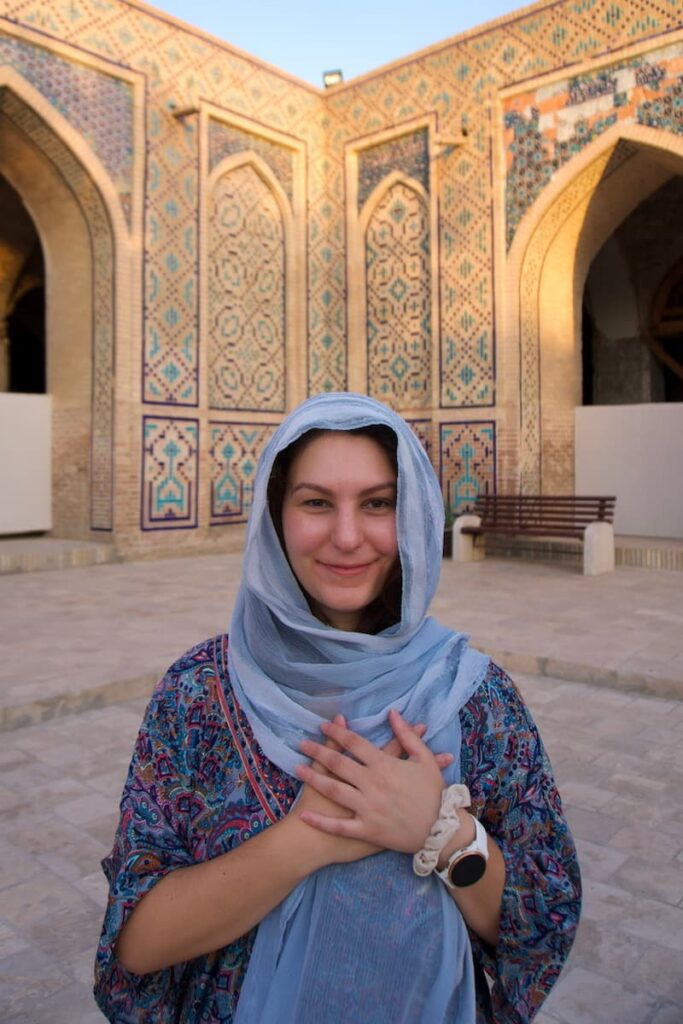
Locals love it when you try the language. Here are a few basics that will instantly put a smile on their faces:
- Salom – Hello
- Rahmat – Thank you
- Iltimos – Please
- Ha / Yo‘q – Yes / No
- Xayr – Goodbye
Cool & Interesting Facts We Learned About Uzbekistan
- Uzbekistan became independent in 1991: Uzbekistan became independent in 1991: It gained independence after the USSR dissolved – the exact year we were born!
- Uzbekistan is one of only two doubly landlocked countries: To reach an ocean, you must cross at least two countries (the only other one is Liechtenstein).
- Samarkand is older than Rome: The city is over 2,700 years old and is considered one of the oldest continuously inhabited cities in Central Asia.
- Photography in the Tashkent Metro was banned until 2018: Many metro stations feature impressive Soviet-era architecture, chandeliers, and mosaics. Photography was prohibited for decades.
- Amir Timur is everywhere: Before visiting, we knew little about Timur (Tamerlane), but quickly realized he’s a national icon honored with statues, streets, and museums everywhere.
- Cotton shaped Uzbekistan’s modern history: A massive focus during the Soviet era, cotton remains a major industry today.
- It has a long-established Korean community: We didn’t expect the visible Korean influence; many ethnic Koreans living here today are descendants of people deported during the Stalin era.
- It feels like everyone in Uzbekistan drives a Chevrolet: Thanks to local manufacturing, Chevrolet completely dominates the roads – you’ll spot the exact same few models everywhere.
We hope this Uzbekistan travel guide helps you plan an unforgettable Silk Road adventure. Be sure to check out our individual city guides to plan your trip better.
⏰ Planning the rest of your trip? Don’t miss our other Uzbekistan guides:
→ Uzbekistan Trains & Transport Ultimate Guide
→ Samarkand Travel Guide
→ Bukhara Travel Guide
→ Tashkent Travel Guide
→ Where to Stay in Tashkent: 3 Best Neighborhoods & Hotels
→ How to Plan the Ideal Uzbekistan Trip: 1, 2 & 3 Week Itineraries
→ How Much Does a Trip to Uzbekistan Actually Cost?
Frequently Asked Questions (FAQs)
100%, yes! Beyond the stunning turquoise domes and rich Silk Road history, it’s one of the most welcoming places you’ll ever experience. If you’re craving an authentic adventure away from heavy tourist crowds, now is the best time to visit Uzbekistan.
As you’ll see in this Uzbekistan travel guide, the efficient high-speed trains, budget-friendly prices, and unmatched local hospitality mean you will absolutely love it!
Absolutely! Uzbekistan is incredibly safe, even for solo travelers and women. Violent crime is extremely rare, and the culture is deeply rooted in hospitality. Just practice standard travel common sense, and you’ll feel totally at ease exploring.
No, tap water is not safe to drink. Avoid it entirely, even in modern parts of Tashkent. It’s fine for brushing your teeth, but for drinking, stick to bottled water or use a filtered water bottle to cut down on plastic.
Yes, keep them tucked safely in your passport. Every hotel or guesthouse will give you a little slip of paper (physical or electronic) when you check out. Personally, we weren’t asked to show them when we left the country, but we met several other travelers who were checked.
Yes, cash (Uzbek Som) is essential for local bazaars, street food, and taxis. The best strategy is withdrawing cash from ATMs using cards like Revolut or Wise to avoid extra fees.
→ Check out our Uzbekistan Travel Cost Guide for a full breakdown of daily expenses.
Yes, it is legal and widely available. Even though it’s a predominantly Muslim country, it’s secular, so you’ll have no trouble finding local beer or wine in bars and restaurants.
The best time to visit Uzbekistan is from April to June and September to October when temperatures are most comfortable for exploring.
ummers are intensely hot (often exceeding 40°C in Bukhara and Khiva), though manageable if you schedule sightseeing for early mornings and evenings.